Quick overview: five areas for autumn colour
Bunkyō is the strongest base for maples: Rikugien and Koishikawa Kōrakuen, two standout gardens for autumn colour, are both in the ward, and Rikugien's seasonal night viewing makes staying nearby especially convenient. Shinjuku is the easiest all-round base: Shinjuku Gyoen combines maples, ginkgo and plane trees, while the station gives you excellent connections across Tokyo and beyond. Shibuya works best for western Tokyo's autumn walks — Yoyogi Park, Meiji Jingū and the Meiji Jingū Gaien ginkgo avenue. Minato gives you several different gardens and parks, often with Tokyo Tower or the waterfront in the background. Ueno is the budget-oriented choice, with Ueno Park, Yanaka and excellent access to Narita.
See also: best areas for first-time visitors, best areas to stay for couples, best areas to stay on a budget and best areas for families.
The five best areas to stay in Tokyo for autumn leaves
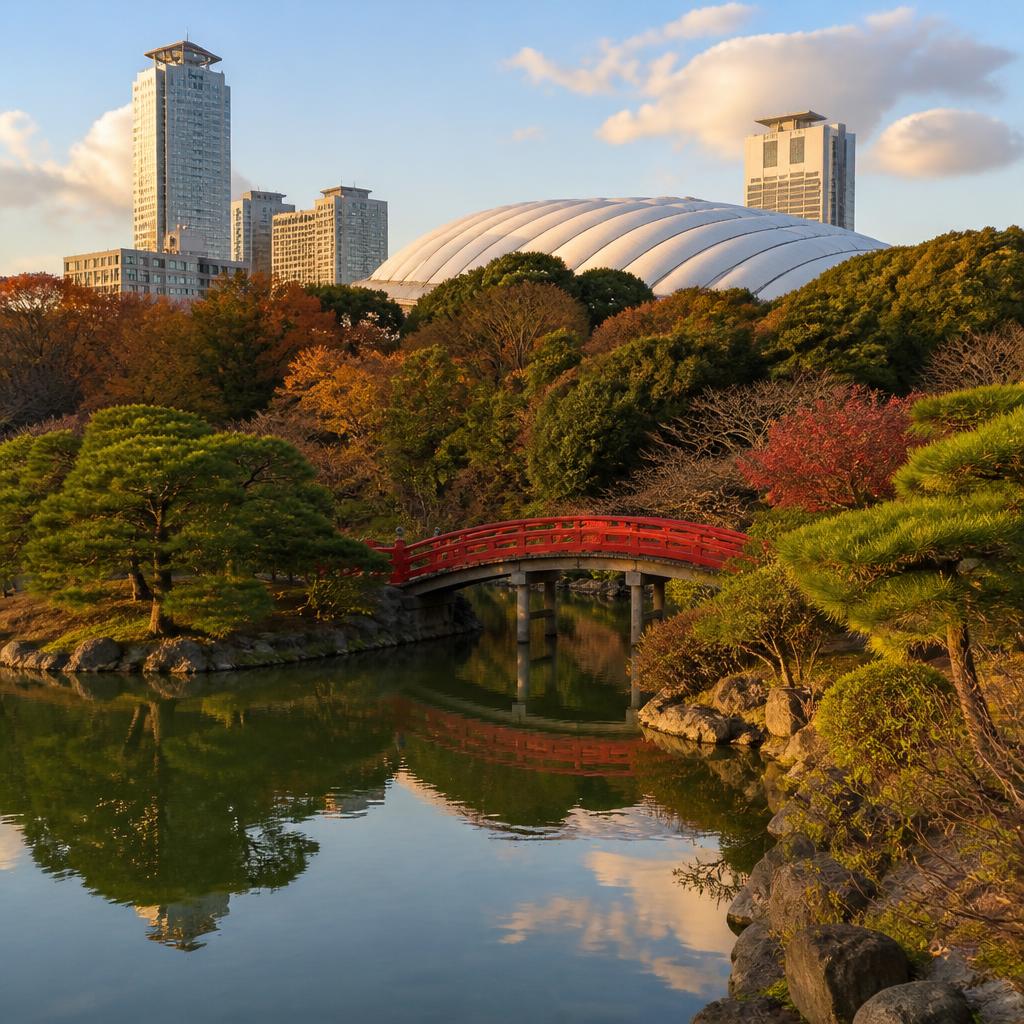
Bunkyō 文京区
Best overall for red maples
- Autumn spots on your doorstep
- Rikugien and Koishikawa Kōrakuen — two standout maple gardens in central Tokyo — plus Nezu Shrine, the ginkgo-lined University of Tokyo Hongō campus and Koishikawa Botanical Garden. Rikugien usually holds special nighttime autumn-leaf viewing in late November or early December.
- Who should stay here
- Travellers whose main goal is momiji photography, early-morning garden visits and a quiet base between them.
- Hotels in autumn
- Mostly business and mid-range hotels around Kōrakuen, Hongō-Sanchōme and Tokyo Dome City, plus smaller stays on the residential streets. The selection is smaller than in Shinjuku or Shibuya, so booking early is useful for November trips.
- Signature places
- Rikugien, Koishikawa Kōrakuen, Nezu Shrine, Hongō campus ginkgo avenue.
- Hotel prices in November
- $–$$ · mostly budget to mid-range stays.
Pros
- +Two standout maple gardens inside the ward
- +Easy access to Rikugien's late-November/early-December night viewing
- +Quiet residential streets — easy early starts
- +Good value for a central location near major gardens
Cons
- −Most hotels are better served by subway than JR
- −Limited late dining after garden visits
- −Smaller hotel selection than Shinjuku or Shibuya
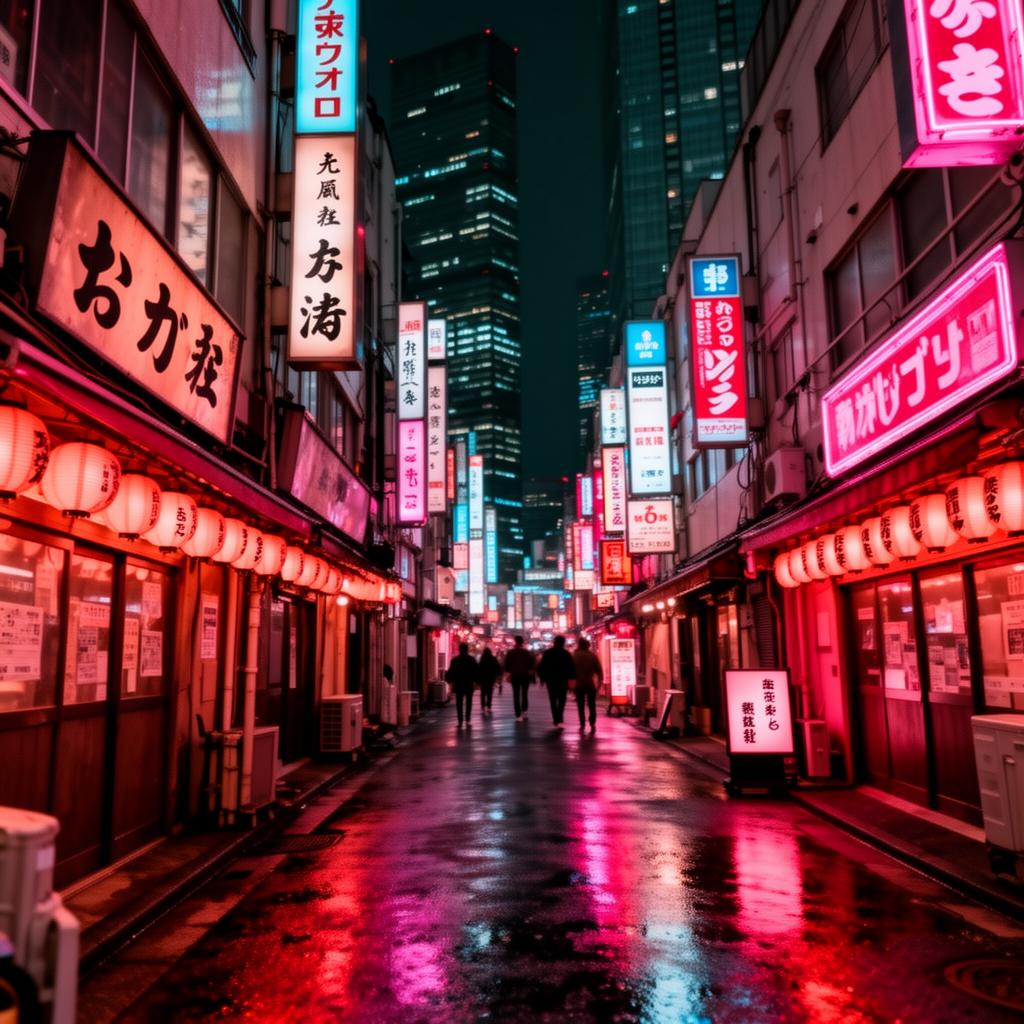
Shinjuku 新宿
Best for convenience and a long colour season
- Autumn spots on your doorstep
- Shinjuku Gyoen is the headline: 58.3 hectares combining landscape, formal and Japanese garden styles, with maples, ginkgo and plane trees that colour at different times. Add Shinjuku Chūō Park and the grounds of Kumano Shrine for smaller, free alternatives.
- Who should stay here
- First-time visitors who want autumn colour without planning around it — a big park at the door and excellent connections for the rest of Tokyo.
- Hotels in autumn
- One of Tokyo's biggest concentrations of hotels, from capsule and business chains around the east side to high-rise hotels in Nishi-Shinjuku. The range is useful in November, when demand is high and prices vary widely by hotel and date.
- Signature places
- Shinjuku Gyoen, Chūō Park, the Nishi-Shinjuku skyline over the trees.
- Hotel prices in November
- $$–$$$$ · every tier available, with a wide spread of prices.
Pros
- +Shinjuku Gyoen has a long autumn season with several types of foliage
- +Very large hotel selection across many price levels
- +Excellent rail connections for autumn day trips
- +Late dining after dark garden walks is easy
Cons
- −Shinjuku Gyoen charges admission and closes in the late afternoon in autumn
- −Crowds and noise around the station are constant
- −Kabukichō side is not ideal for a quiet early-morning start
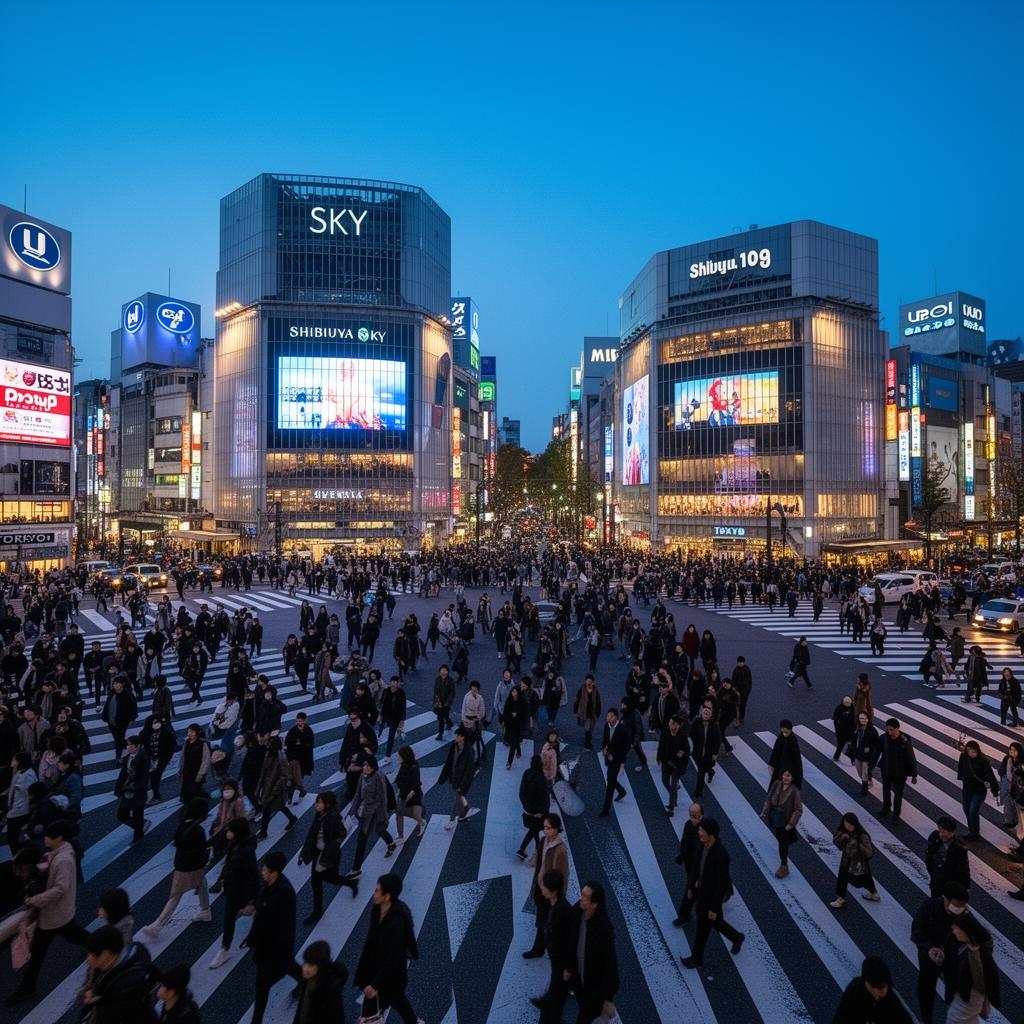
Shibuya 渋谷
Best for ginkgo avenues and big-park walks
- Autumn spots on your doorstep
- Yoyogi Park, the forested grounds of Meiji Jingū, and the Meiji Jingū Gaien ginkgo avenue — a 300-metre avenue lined with 146 ginkgo trees that usually looks best from mid-November into early December.
- Who should stay here
- Photographers, couples and anyone who prefers golden ginkgo boulevards to formal maple gardens.
- Hotels in autumn
- A modern, design-led mix: new towers around the station, boutique hotels in Shibuya and Daikanyama, plus mid-range chains toward Ebisu. Prices are generally on the higher side, and November weekends can book quickly.
- Signature places
- Meiji Jingū Gaien ginkgo avenue, Yoyogi Park, Meiji Jingū forest, Nabeshima Shōtō Park.
- Hotel prices in November
- $$$ · generally expensive, with fewer genuine budget options.
Pros
- +Several free outdoor spots with no garden admission
- +Meiji Jingū Gaien is an easy short train ride or walk away
- +Excellent food and coffee for after a long walking day
- +Yamanote, Ginza, Hanzōmon and Fukutoshin lines
Cons
- −Gaien's ginkgo avenue is extremely crowded at weekends
- −Ginkgo turns earlier than many maple spots, so timing is tighter
- −Among the pricier bases in November
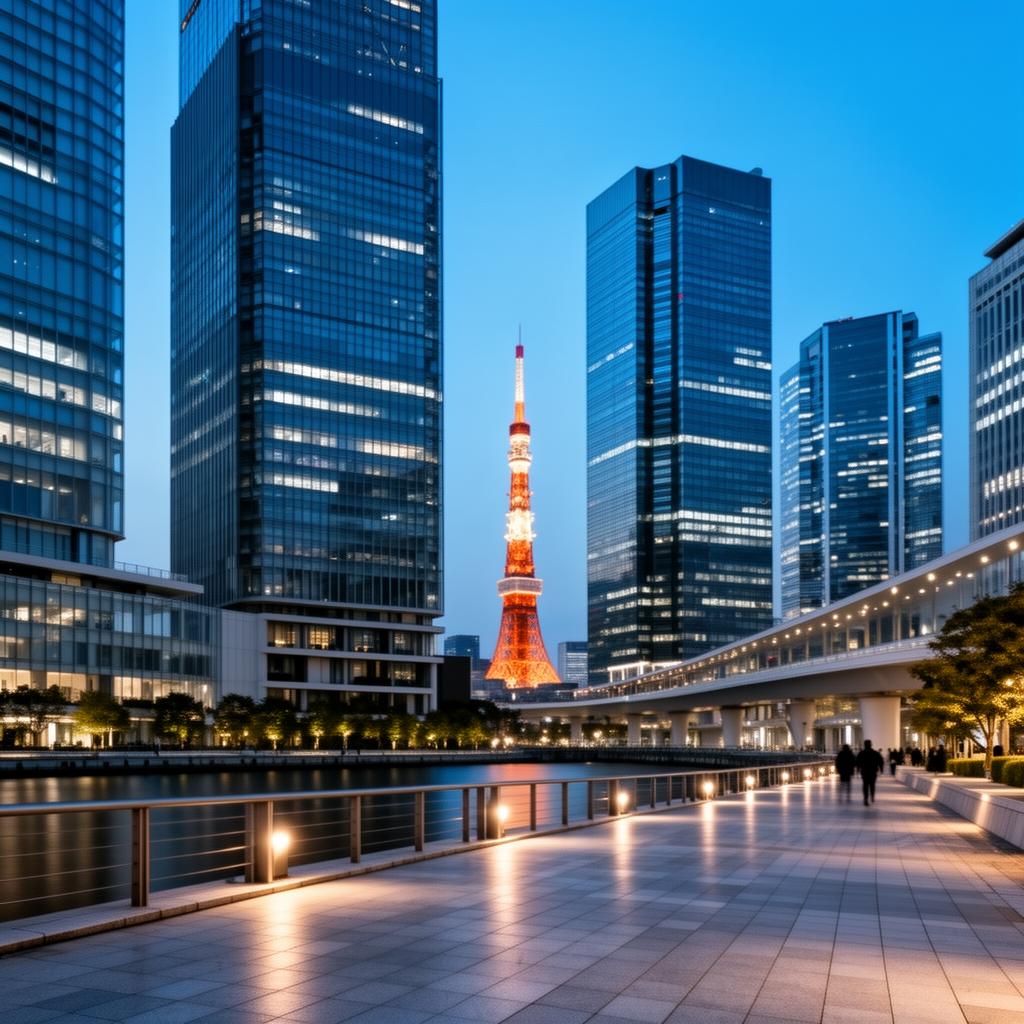
Minato 港区
Best for variety of green spaces
- Autumn spots on your doorstep
- Several major parks and gardens are spread across the ward: Shiba Park under Tokyo Tower, Hamarikyū Gardens on the bay, Kyū Shiba Rikyū, the Institute for Nature Study in Shirokanedai, Arisugawa-no-miya Park in Azabu and the Mōri garden at Roppongi Hills.
- Who should stay here
- Travellers who want several different autumn settings — waterfront, garden, temple and skyline — within a few stops, plus convenient airport access.
- Hotels in autumn
- A broad range: business hotels around Hamamatsuchō and Tamachi, upscale properties near Tokyo Tower and Roppongi, and waterfront hotels around Takeshiba. Availability and prices vary considerably by sub-area.
- Signature places
- Shiba Park and Zōjō-ji with Tokyo Tower, Hamarikyū Gardens, Arisugawa Park, Institute for Nature Study.
- Hotel prices in November
- $$–$$$$ · from business hotels to luxury.
Pros
- +Several major parks and gardens within a relatively compact area
- +Autumn colour framed by Tokyo Tower
- +Tokyo Monorail gives convenient Haneda access from Hamamatsuchō
- +Yamanote Line plus multiple subway lines
Cons
- −The autumn spots are spread out rather than concentrated in one garden
- −Some office areas are quiet in the evening
- −Hamarikyū and Kyū Shiba Rikyū close in the late afternoon
Ueno 上野
Best budget alternative
- Autumn spots on your doorstep
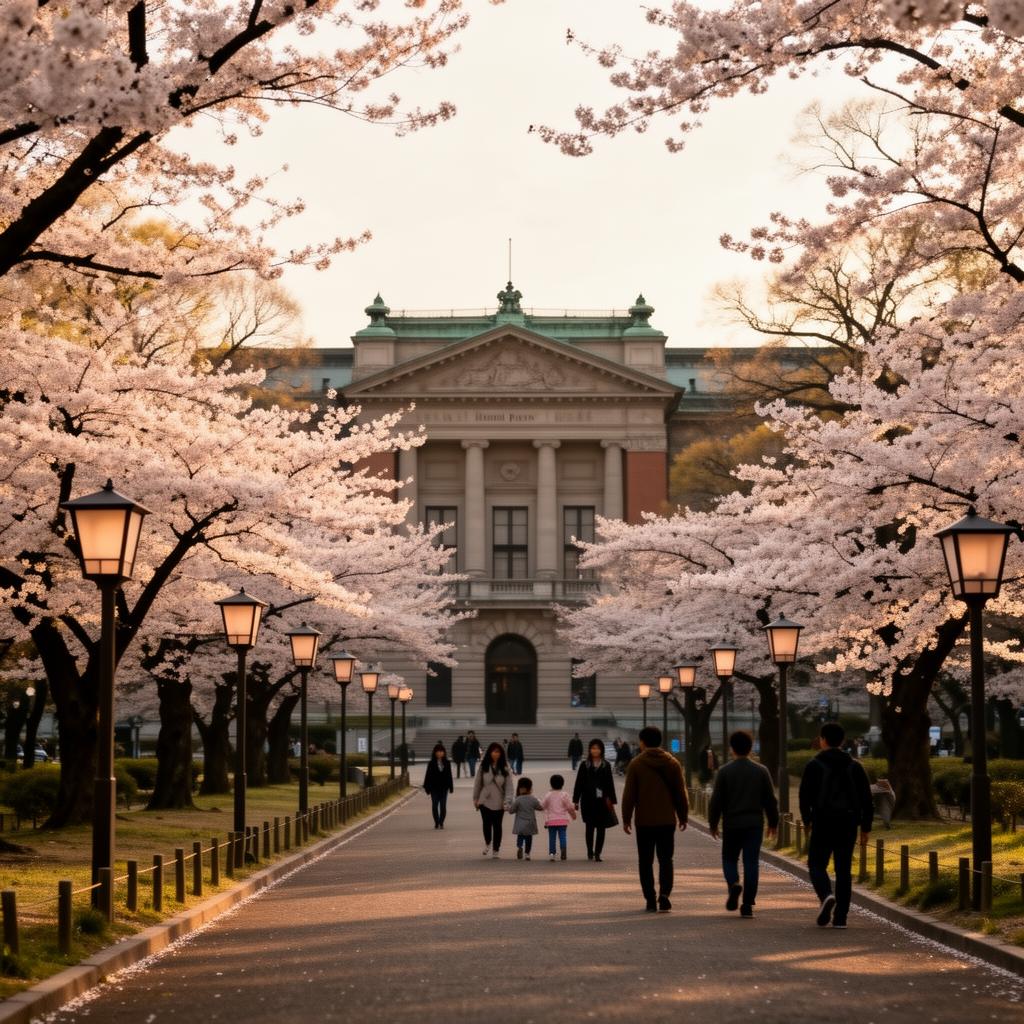
- Ueno Park's ginkgo, zelkova and maples around Shinobazu Pond and the Tōshōgū shrine, plus the temple grounds, cemetery lanes and smaller maple spots of Yanaka to the north.
- Who should stay here
- Budget travellers, Narita arrivals and anyone who wants free outdoor autumn scenery instead of ticketed gardens.
- Hotels in autumn
- A strong budget selection: hostels, capsule hotels and many business chains around the station. The Yamanote Line and Keisei Ueno are both close, making the area particularly practical for independent travellers.
- Signature places
- Ueno Park, Shinobazu Pond, Tōshōgū, Yanaka Cemetery's tree-lined lanes.
- Hotel prices in November
- $–$$ · one of the stronger budget options of the five.
Pros
- +Free park that can be visited early for sunrise photography
- +Yanaka adds a quieter, low-rise autumn walk nearby
- +Keisei Skyliner reaches Narita in about 41 minutes
- +Bunkyō's gardens are reachable by a short train ride
Cons
- −The main autumn sights are less concentrated than in Bunkyō
- −Busy and scruffy around the station
- −Around 25–30 minutes to the western ginkgo avenues
Tokyo autumn-leaf areas compared
| Metric | Bunkyō | Shinjuku | Shibuya | Minato | Ueno |
|---|---|---|---|---|---|
| Hotel price (Nov) | $–$$ | $$–$$$$ | $$$ | $$–$$$$ | $–$$ |
| Maple (momiji) | Excellent | Very good | Good | Good | Good |
| Ginkgo (ichō) | Good | Very good | Excellent | Very good | Very good |
| Peak timing | Late Nov–early Dec | Mid Nov–early Dec | Mid Nov–early Dec | Late Nov | Late Nov |
| Free vs ticketed | Mostly ticketed | Ticketed | Free | Mixed | Free |
| Evening illumination | Yes (Rikugien) | No | No | Limited/varies | No |
| Crowds | Moderate | Heavy | Very heavy | Moderate | Heavy |
| Transport | 5 subway lines; JR Yamanote at Komagome is just outside the ward | Major rail and subway hub | Yamanote + multiple subway lines | Yamanote + multiple subway lines + monorail to Haneda | Yamanote + Narita Skyliner |
Which area should you choose for autumn leaves?
When do the leaves actually turn in Tokyo?
For central Tokyo, ginkgo usually starts looking good from mid-November, while maples tend to peak later, from late November into early December. Exact dates move with the weather. Late November is the safest window if you want to combine both. Many formal gardens open around 09:00 and close by late afternoon, while places such as Yoyogi and Ueno Park can be visited earlier or later.
Best overall area for autumn leaves: Bunkyō
Bunkyō is the strongest choice if red maples are the priority. Rikugien and Koishikawa Kōrakuen are both in the ward, so you can build several garden visits into the same stay. Rikugien also holds special nighttime autumn-leaf viewing in some years. If you stay near Komagome or the gardens themselves, returning to the hotel between visits is particularly easy. Read the Bunkyō area guide for hotel specifics.
Best convenient base: Shinjuku
Shinjuku is the practical choice for a short trip. Shinjuku Gyoen is large and combines several types of autumn trees, while Shinjuku Station gives you excellent connections for the rest of Tokyo and for day trips. Mount Takao is easy to reach by Keiō, and Kamakura can be reached directly on the Shōnan-Shinjuku Line on applicable services. See the Shinjuku area guide, and the first-time visitors guide if this is also your first trip.
Best for ginkgo avenues: Shibuya
If the image you have in mind is a golden tunnel of trees rather than a red maple over water, Shibuya is a strong western base. The Meiji Jingū Gaien ginkgo avenue usually looks best from mid-November into early December and is free to walk through. Yoyogi Park and Meiji Jingū are also easy to reach from Shibuya and Harajuku. Go early if you want quieter photos, especially on weekends. The Shibuya area guide covers the hotel scene, and the couples guide is worth a look if this is a romantic trip.
Best for variety of green spaces: Minato
Minato is useful if you want variety rather than one headline garden. Shiba Park gives you autumn trees with Tokyo Tower; Hamarikyū combines a traditional garden with the waterfront; Kyū Shiba Rikyū is a compact Edo-period garden near Hamamatsuchō; and the Institute for Nature Study and Arisugawa-no-miya Park offer a greener, quieter setting. Hotels range from business properties to luxury, and Hamamatsuchō gives you a convenient route to Haneda. The Minato area guide explains the sub-areas.
Best budget alternative: Ueno
Ueno is the budget-oriented choice. Ueno Park is free and open, with ginkgo, zelkova and maple around Shinobazu Pond and Tōshōgū, while Yanaka adds quieter streets and temple grounds. The area also has a strong selection of budget hotels and direct access to the Keisei Skyliner for Narita. Bunkyō's gardens are reachable by a short train ride, so you can stay in Ueno and still visit the city's standout maple gardens. See the Ueno area guide and the budget guide for cheaper alternatives across the city.
Practical notes for an autumn trip
Book early if you are travelling in late November, especially for a specific hotel or a weekend stay. Check the official foliage updates shortly before your trip because peak dates shift with the weather. For popular gardens, weekday mornings are usually the easiest time for photography. Nighttime illumination is a special event rather than the normal opening hours, so check the current schedule and ticket rules. Late November days are short, so put gardens with fixed closing times earlier in the day and leave free parks or avenues for later.
Final recommendation
The five bases cover different strengths rather than one clear winner: Bunkyō for red maples, Shinjuku for convenience, Shibuya for ginkgo, Minato for variety, and Ueno for value.
Choose
Bunkyō
If red maples are the priority and you want Rikugien and Koishikawa Kōrakuen close by, with the option of returning to Rikugien for its seasonal nighttime viewing.
Choose
Shinjuku
If you want a large garden nearby, the widest hotel choice, and a major rail hub for combining autumn walks with day trips.
Choose
Shibuya
If you are mainly here for the Meiji Jingū Gaien ginkgo avenue and the free parks around Yoyogi and Meiji Jingū, and you are comfortable with higher hotel prices.
Choose
Minato
If you want several different autumn settings — gardens, temple grounds, waterfront views and Tokyo Tower — plus convenient access to Haneda.
Choose
Ueno
If you want to keep accommodation costs down and prefer free parks, early-morning walks and easy access to Narita.
Frequently asked questions
When is the best time to see autumn leaves in Tokyo?+
Late November is a good starting point if you want to combine ginkgo and maple viewing, but there is no fixed peak date. Ginkgo often colours from mid-November, while many maple spots follow later in November and can remain attractive into early December. Check the latest foliage reports shortly before your trip.
Which Tokyo area is best for autumn leaves?+
Bunkyō is the strongest choice if red maples are your priority. Rikugien and Koishikawa Kōrakuen are both nearby, making it easy to visit the gardens without spending much time on transport. Rikugien also has a recurring nighttime autumn foliage event, although dates and ticket arrangements vary by year.
Where is the Meiji Jingū Gaien ginkgo avenue and where should I stay for it?+
The Icho Namiki avenue is near Aoyama-itchōme and Gaienmae stations in the Meiji Jingū Gaien area. Shibuya is a convenient base: Gaienmae is two stops from Shibuya on the Ginza Line, while the avenue is also reachable on foot. The avenue itself is free to walk through, but it can become very crowded at peak foliage.
Is Shinjuku Gyoen worth visiting in autumn?+
Yes. Its mix of Japanese garden, formal garden and landscape areas includes maple, ginkgo and plane trees that change colour at different times, giving the garden a relatively long autumn season. In the autumn period it opens from 9:00 and closes in the late afternoon; admission is paid.
Where can I see autumn leaves in Tokyo for free?+
Ueno Park, Yoyogi Park, the Meiji Jingū grounds, Shiba Park and the Meiji Jingū Gaien ginkgo avenue are useful free options. Opening arrangements vary by place, so do not assume every site is accessible at all hours. The major strolling gardens — including Rikugien, Koishikawa Kōrakuen, Hamarikyū and Shinjuku Gyoen — charge admission and have fixed opening hours.
Are Tokyo hotels expensive in November?+
November can be a busy period for Tokyo hotels, especially around weekends and popular foliage dates, but prices vary substantially by neighbourhood, hotel and year. Ueno and Bunkyō are generally useful areas to check for value, while Shibuya tends to have higher rates. Book early if you need a specific hotel or weekend.
Which garden has evening illumination for autumn leaves?+
Rikugien is one of Tokyo's best-known autumn illumination gardens. Its nighttime foliage viewing is a special event rather than normal opening hours; in 2025 it ran from November 28 to December 9, with a separate nighttime ticket. Check the official schedule for the year you visit.
Should I take a day trip for better autumn colour?+
It can be worthwhile if you have an extra day. Mount Takao is an easy autumn day trip from Shinjuku, while Kamakura combines foliage with temple visits. Their peak timing can differ from central Tokyo, so check current foliage reports rather than planning around a fixed date. On a short trip, Tokyo's central gardens are enough to build a good autumn itinerary.
Find your autumn base on the map
Use the interactive TokyoStayMap to filter neighbourhoods by price, atmosphere and transport, then compare hotels near the gardens you want to visit.
Keep exploring
Related Tokyo guides
More from the TokyoStayMap editorial series — pick the comparison that matches your trip.
Best areas for first-time visitors
The main hub guide — compare Shinjuku, Ueno, Shibuya, Ginza, Minato and Ningyōchō for a first Tokyo trip.
Read guideBest areas for nightlife
Shinjuku, Shibuya, Roppongi, Ebisu and Ginza compared for bars, clubs and late-night convenience.
Read guideBest areas for families
Family-friendly Tokyo areas with parks, apartment hotels, safety and easy transport for kids.
Read guideBest areas to stay on a budget
Ningyōchō, Ueno, Asakusa, Ikebukuro and Kanda — One of Tokyo's best value neighbourhoods for budget travellers.
Read guide